Kitchen trends come and go, but some cabinet styles never really leave. Shaker cabinets are one of them.
If you’re planning a new kitchen—or renovating an old one—you’ve probably noticed how often shaker cabinets show up in inspiration photos. White kitchens. Modern farmhouses. Minimalist spaces. Even high-end luxury homes. Same cabinet style. Different vibe.
So what makes shaker cabinets so adaptable? And more importantly, how do you choose the right shaker cabinet design for your kitchen, your lifestyle, and your budget?
Let’s break it down, designer to homeowner, without the fluff.
What Are Shaker Cabinets?
Shaker cabinets are defined by one simple idea: a five-piece door with a recessed center panel. No heavy carvings. No ornate details. Just clean lines and balanced proportions.
The style comes from the Shaker religious movement in the 18th century, where furniture was designed to be practical, durable, and honest. No decoration for decoration’s sake. Everything had a purpose.
Fast forward to today, and that same philosophy fits perfectly with modern living.
Clean design
Easy to pair with different materials
Flexible across styles and budgets
That’s why shaker style cabinets are now considered one of the safest—and smartest—choices in kitchen design.
According to the National Kitchen & Bath Association, transitional and shaker-style kitchens consistently rank among the most requested designs in North American remodeling projects.
Why Homeowners and Designers Keep Choosing Shaker Cabinets?
Let’s be honest. Most people don’t want a kitchen that looks trendy for two years and dated by year five.
Shaker cabinets solve that problem.
Here’s why they work so well:
Timeless appearance – They don’t scream a specific decade.
Style flexibility – They can look modern, traditional, or somewhere in between.
Material adaptability – Wood, MDF, painted, stained, matte, or satin finishes all work.
Resale-friendly – Buyers recognize and trust the look.
If you’re designing for a family home, a rental property, or even a multi-unit development, shaker cabinets feel like a smart long-term bet.
Top Shaker Cabinets Design Ideas
Classic White Shaker Cabinets

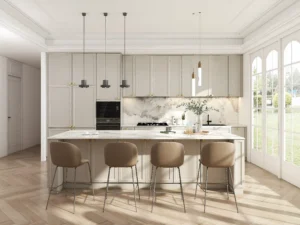
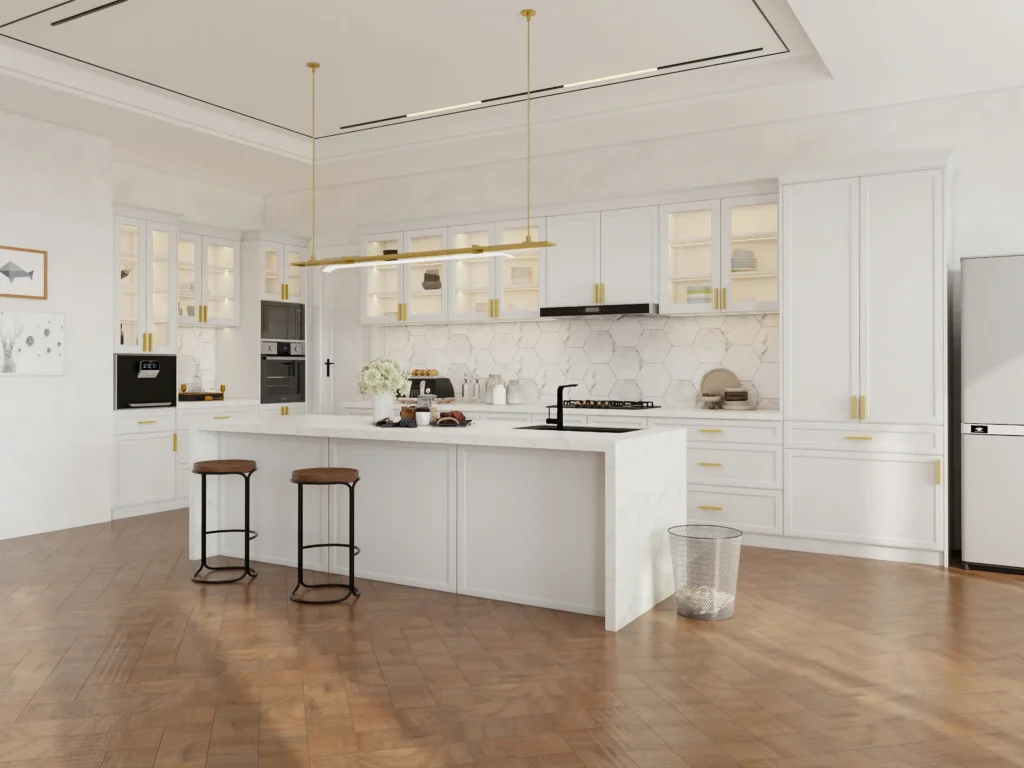
White shaker cabinets are everywhere—and for good reason.
They make kitchens feel brighter, larger, and cleaner. In smaller kitchens, white shaker cabinets reflect light and reduce visual clutter. In larger spaces, they create a calm backdrop for bolder design elements.
But here’s the designer trick most people miss:
not all white shaker kitchens look the same.
What changes the look?
The shade of white (warm vs. cool)
The countertop material
Hardware style (black, brass, stainless)
Backsplash texture
Pair white shaker cabinets with quartz for a modern look, or marble for something more classic. Add matte black pulls and suddenly the kitchen feels contemporary. Switch to brushed brass, and it leans elegant.
Same cabinet. Totally different mood.
Bold Color Shaker Cabinets

If white feels too safe, colored shaker cabinets are where things get interesting.
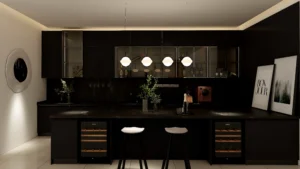
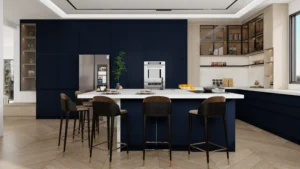
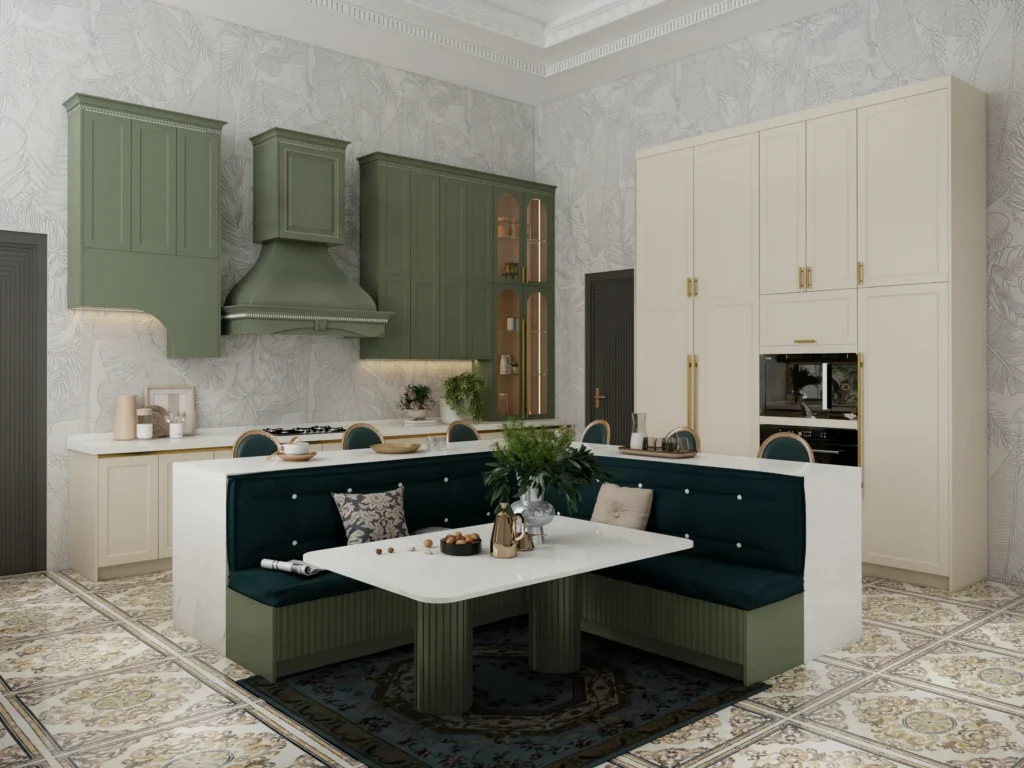
Deep blues, forest greens, charcoal gray, and even black shaker cabinets are gaining serious traction—especially in open-plan homes where the kitchen needs visual presence.
Why does the shaker style work so well with bold colors?
Because the door design is simple. The color becomes the star, not the detailing.
Some popular combinations designers love:
Navy shaker cabinets with brass hardware
Dark green shaker cabinets with wood accents
Matte black shaker cabinets paired with light stone countertops
According to a 2024 kitchen trend report by Houzz, darker cabinet colors are increasingly popular in mid- to high-end kitchen renovations, especially when balanced with lighter countertops and walls.
If you want personality without chaos, bold-color shaker cabinets are a safe way to push boundaries.
Two-Tone Shaker Cabinets

Can’t decide between light and dark? You don’t have to.
Two-tone shaker cabinets are one of the most practical design solutions out there.
A common setup looks like this:
Light-colored upper cabinets
Darker base cabinets
Why it works:
Upper cabinets stay visually light
Base cabinets ground the space
The kitchen feels layered, not flat
Another popular approach is:
Neutral shaker cabinets throughout
A contrasting color on the island
This keeps the kitchen cohesive while still adding a focal point. It’s especially effective in open kitchens that flow into living or dining areas.
Shaker Cabinets with Glass Inserts
If your kitchen feels heavy or boxed in, glass-front shaker cabinets can help.
By swapping solid panels for glass on select upper cabinets, you:
Add visual depth
Let light move through the space
Create areas for display without going full open shelving
Clear glass feels classic. Frosted or reeded glass feels more modern and forgiving (no pressure to keep everything perfectly styled).
The key is restraint. Use glass inserts sparingly—on a few uppers or around a window wall—so the kitchen still feels clean and organized.
Shaker Cabinets with Open Shelving

Open shelving gets a lot of mixed opinions, and honestly, that’s fair.
But when used alongside shaker cabinets, it works surprisingly well.
Think of open shelves as a visual pause. They break up long cabinet runs and give the eye a place to rest.
Best places for open shelving:
Next to a range hood
In a coffee or prep zone
On short wall sections where full cabinets feel bulky
The shaker cabinet’s clean lines keep the kitchen grounded, while the shelves add warmth and accessibility. Together, they strike a balance between function and personality.
Shaker Cabinets for Small Kitchens: Smart and Space-Saving
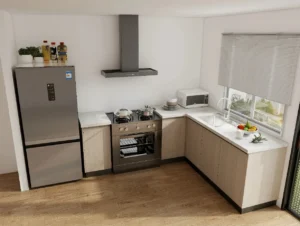
Small kitchen? Shaker cabinets are actually a great choice.
Their simple door profile avoids visual clutter, which makes tight spaces feel more open.
- Use light-colored shaker cabinets

- Extend cabinets to the ceiling

- Choose integrated or minimal hardware

Instead of drawing attention to the cabinets themselves, shaker designs let the room breathe.
And yes, they work beautifully in apartments, condos, and compact layouts.
Choosing the Right Material for Shaker Cabinets
| Material Type | Key Characteristics | Advantages | Considerations | Best For | Cost Level |
|---|---|---|---|---|---|
| Solid Wood | Natural hardwood with visible grain | Durable, premium look, long lifespan | Higher cost, sensitive to humidity changes | High-end kitchens, stained shaker cabinets | $$$ |
| Plywood with Veneer | Engineered core with real wood veneer | Good stability, balanced cost and performance | Veneer quality varies by manufacturer | Mid-range kitchens, mixed finishes | $$ |
| MDF with Painted Finish | Smooth engineered fiberboard | Ideal for painted shaker cabinets, cost-effective | Not ideal for heavy moisture exposure | Painted shaker cabinets, modern kitchens | $–$$ |
Final Thoughts: Are Shaker Cabinets Right for You?
If you’re looking for a kitchen cabinet style that:
Won’t feel dated in five years
Works across modern and traditional designs
Fits different budgets and project types
Balances beauty with practicality
Then yes—shaker cabinets are hard to beat.
They’re not flashy. They’re not loud. But they quietly do everything right. Like a well-designed kitchen should.
If you’re planning a renovation or working on a residential or multi-unit project, shaker cabinets give you flexibility today—and peace of mind tomorrow.
And that’s a design decision you rarely regret.
FAQs
What material is best for shaker cabinets?
The best material for shaker cabinets depends on your budget, finish preference, and kitchen environment. Solid wood is ideal for natural or stained shaker cabinets, offering strength and long-term durability. MDF is often the best choice for painted shaker cabinets because it provides a smooth surface and resists warping. High-quality plywood is also widely used for its balance of stability and cost.
What kitchen styles are shaker cabinets best suited for?
Shaker cabinets are best suited for transitional kitchens, but they also work well in modern, farmhouse, and traditional kitchen styles. Their clean lines fit minimalist and contemporary spaces, while their framed design complements classic and farmhouse interiors. This versatility makes shaker cabinets a popular choice for homeowners who want a timeless look that adapts to different design styles.
Are shaker cabinets more expensive than flat-panel cabinets?
Shaker cabinets are usually slightly more expensive than flat-panel (slab) cabinets due to their framed construction, but they are often more affordable than ornate or custom decorative cabinet styles. Prices vary based on materials, finishes, and customization level.
Do shaker cabinets go out of style?
No, shaker cabinets are widely regarded as a timeless cabinet style. Their simple design has remained popular for decades and continues to be recommended by designers for kitchens that need long-term appeal and strong resale value.
Are shaker cabinets good for small kitchens?
Yes, shaker cabinets are an excellent choice for small kitchens. Their clean, uncluttered design helps make compact spaces feel more open. Light-colored shaker cabinets, especially white or soft gray, can visually enlarge a small kitchen.