A small kitchen can feel frustrating fast. You want storage, prep space, and good looks, but the room keeps saying, “Pick two.” That is where a smart one wall kitchen comes in. By placing the main kitchen functions on a single wall, you can keep the layout clean, save floor space, and still create a kitchen that feels complete instead of compromised.
The good news is this: a compact kitchen does not need more stuff. It needs better planning. Professional kitchen guidelines from NKBA place a big focus on workflow, prep space, landing areas, and clearances, which is exactly why a well-planned one wall kitchen layout can work so well in apartments, studios, open-plan homes, and smaller renovations. At the same time, Houzz’s latest kitchen research shows that homeowners are putting real value on cabinets, storage upgrades, and practical built-ins, not just decorative finishes.
What Is a One Wall Kitchen?
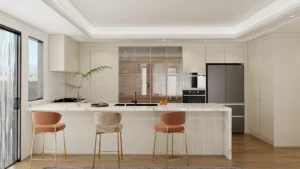
A kitchen on one wall is exactly what it sounds like. The sink, cooktop, storage, and most of the countertop all sit along one straight run. There is no corner turn, no second leg, and no wraparound layout. It is simple, but that simplicity is also its strength.
This layout works especially well when space is limited or when you want the kitchen to blend into a larger room. In a studio or open-plan home, a one wall kitchen design keeps the room feeling lighter and less crowded. Instead of the kitchen spreading everywhere, it behaves itself and stays in one neat zone.
It is also a layout that rewards discipline. In a larger kitchen, bad decisions can hide in extra square footage. In a small one wall kitchen, every cabinet choice shows up immediately. If the workflow is awkward, you feel it. If the storage is smart, you feel that too.
Why Cabinet Design Matters in a One Wall Kitchen?
In this kind of layout, the cabinets are not just part of the kitchen. They are almost the whole kitchen.
That means your cabinet plan affects everything: how much you can store, how easy it is to cook, how open the room feels, and whether the space looks calm or chaotic. Houzz’s 2026 kitchen trends data found that 84% of renovating homeowners upgrade cabinets, and 94% of upgraded cabinets include specialty storage. That tells you something important. People are not treating cabinetry like background scenery anymore. They are treating it like the engine of the room.
A good one wall kitchen design layout should do three things at once. It should help you move smoothly, store more than you think possible, and make the room look bigger than it is. That is the sweet spot.
10 One Wall Kitchen Design Tips to Maximize Limited Space
01
Start with the right functional order
Do not begin with symmetry. Begin with use.
A strong one wall kitchen layout usually works best when the sequence feels natural: fridge, prep area, sink, more prep area, then cooktop. NKBA also recommends that a full-height obstacle should not separate two primary work centers. In plain English, do not drop a tall pantry cabinet right between the sink and cooktop and expect the kitchen to feel smooth. That is like putting a wall in the middle of a hallway.

02
Protect your prep space
A kitchen without prep space is like a desk without a writing surface. It may look complete, but it does not really work.
NKBA recommends a continuous prep/work section of countertop at least 36 inches wide and 24 inches deep immediately next to a sink for the main prep zone. That makes a big difference in a tiny small one wall kitchen, where every inch of usable counter matters. One generous prep zone is usually better than several tiny broken-up surfaces.

03
Use full-height cabinets wisely
Tall cabinets are one of the best tools in a one wall kitchen design. They help you use vertical space, reduce dust-catching gaps above the cabinets, and create room for pantry storage, cleaning supplies, and small appliances.
But placement matters. NKBA recommends that a full-height, full-depth obstacle should not separate two main work centers. So yes, use tall cabinets, but cluster them at one side or at the ends when possible. A tall pantry at the far edge feels intentional. One shoved into the middle often feels heavy.

04
Make base cabinets work harder
In a compact kitchen, base cabinets need to earn their keep. Deep drawers, pull-out bins, tray dividers, and interior organizers usually perform better than basic shelves because they make the storage easier to reach.
That lines up with what homeowners are actually choosing. Houzz reports that 94% of upgraded kitchen cabinets include specialty storage, and the most common features include pull-outs for waste or recycling, tray storage, spice storage, and cutlery storage. In other words, smart storage is no longer a luxury add-on. It is becoming the standard.

05
Keep upper cabinets from feeling too heavy
Upper cabinets are useful, but too many bulky uppers can make a narrow kitchen feel top-heavy. In a small one wall kitchen, that visual pressure shows up quickly.
A smarter move is to mix solid storage with breathing room. You can use slimmer uppers, lighter finishes, glass-front sections, or a short open shelf for daily items. This keeps the wall useful without making it feel like it is leaning over you.

06
Choose light, warm finishes to visually open the room
Color changes how a kitchen feels before you even open a drawer.
Houzz’s 2026 kitchen data shows that wood has overtaken white as the top cabinet color, while white still remains a common choice, especially for contrasting upper cabinets. That makes sense. Warm wood tones bring character, while lighter uppers help a compact kitchen feel more open. For many one wall kitchen ideas, a mix of warm wood lowers and light uppers is a strong balance between warmth and spaciousness.

07
Let the backsplash and countertop simplify the wall
A long straight kitchen wall can either look calm or cluttered. Much of that comes down to surface choices.
Houzz reports that slab backsplashes are gaining traction, and full-height backsplash coverage also remains popular. In a one wall kitchen, that kind of visual continuity helps the whole run feel longer and cleaner. Fewer breaks, fewer grout lines, less visual chatter. Think of it like using one long brushstroke instead of several short ones.

08
Pick appliances that fit the layout, not just the wishlist
Big appliances can bully a small kitchen.
NKBA recommends specific landing areas for key appliances, including at least 15 inches on the handle side of a refrigerator and landing space around cooking surfaces and ovens. It also recommends placing the dishwasher close to the prep/cleanup sink. These details matter in a kitchen on one wall with island too, because the island cannot fix a crowded appliance wall if the main run is poorly planned.

09
Add lighting that makes the kitchen feel larger
Good lighting is not decoration here. It is space correction.
A dim one-wall layout can feel narrower than it is. Under-cabinet lighting, even overhead lighting, and brighter task zones help the kitchen feel more usable and less boxed in. If your backsplash, countertop, and cabinet finishes are already simple, good lighting will make that clean line feel even better.

10
Customize around real habits, not showroom photos
This may be the most important tip of all.
Do you cook every day or mostly reheat meals? Do you need a broom cabinet, a coffee zone, or a microwave niche? Are you storing bulk groceries or just the basics? A beautiful one wall kitchen layout with island can still fail if it does not match how you live.
This is where custom or semi-custom cabinets often make more sense than just copying a Pinterest image. A showroom kitchen is a stage set. Your kitchen has to survive Tuesday night.

How to Choose the Best One Wall Kitchen Cabinets for Your Space?
Start with the wall length, not the mood board. A beautiful cabinet concept can fall apart if the actual wall is too short for a comfortable sink, prep area, and cooktop arrangement.
Next, decide how much storage you really need. That should shape the cabinet mix. More drawers? A tall pantry? Appliance housing? Open shelves? Do not choose the look first and hope the function figures itself out later.
Then think about cabinet type. Stock cabinets can work for simple renovations and tighter budgets. Semi-custom gives you more flexibility. Custom cabinets usually make the most sense when the wall length is tight and every inch needs to be used carefully.
Finally, think about access and long-term comfort. NKBA and ADA-based planning guidance both emphasize practical clearances, landing space, and access around appliances and work surfaces. ADA rules apply specifically to accessible design contexts, but the principles are still useful even for standard residential kitchens because they push you toward kitchens that are easier to move through and easier to use.
Conclusion
A one wall kitchen may be simple, but it is not basic. When the cabinet layout is planned well, this format can give you strong storage, better workflow, and a cleaner visual result than many larger kitchens.
The key is to stop thinking only about how much you can fit and start thinking about how well it will work. Protect the prep space. Use tall cabinets strategically. Keep the wall visually balanced. Choose storage that supports real daily habits. Do that, and even a compact one wall kitchen layout can feel smart, stylish, and surprisingly complete.
FAQs
Is a one wall kitchen a good idea for small homes?
Yes, it is one of the best options for compact homes and apartments. A one wall kitchen layout keeps everything in one clear zone, which helps the room feel more open and less crowded.
How do you make a one wall kitchen more functional?
Focus on workflow, prep space, and storage. A good one wall kitchen design layout should include a practical order for the sink, cooktop, fridge, and cabinets, so the kitchen feels easy to use.
Can a one wall kitchen have an island?
Yes, a one wall kitchen with island can work very well if the room has enough clearance. The island can add prep space, storage, and seating, but it should not make movement feel tight.
What colors work best in a small one wall kitchen?
Light colors, warm wood tones, and soft neutrals usually work best. They help a tiny small one wall kitchen feel brighter, calmer, and visually larger.
Are custom cabinets worth it for a one wall kitchen?
In many cases, yes. Since a kitchen on one wall has limited space, custom or semi-custom cabinets can help you use every inch more efficiently and create storage that fits your real needs.